
Study your needs
Present consumption, uses and site constraints.
Photovoltaic solutions
Produce part of your electricity on site and reduce grid purchases. This configuration suits homes, shops and businesses using electricity during the day.
Request a tailored quote ↗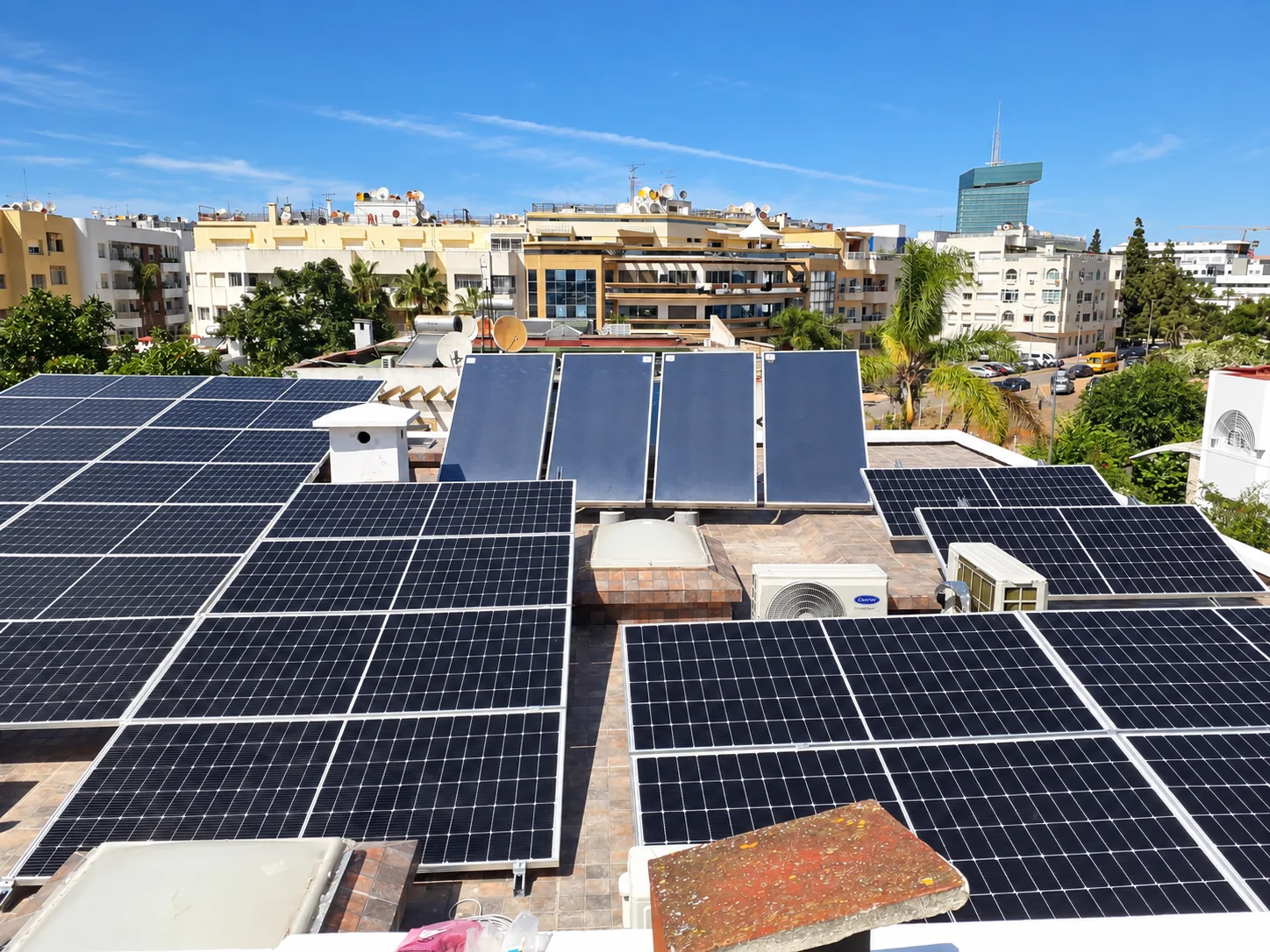
Panels produce direct current; a grid-connected inverter converts it for your equipment. The grid supplements insufficient solar output. Surplus handling depends on the chosen configuration and connection conditions.
Panel power and quantity follow the site study. The inverter matches installed power. Include suitable electrical boxes, cables, protection, earthing and mounting for the roof or ground. Batteries are not essential. Prepare bills and consumption times; assess shade, available space, electrical installation and connection.
We assess demand, area, shade and orientation. The proposal states kWp, equipment, estimated production and works. Connection procedures must be checked for each project. Monitor output and report unusual drops. Cleaning and inspections of mounts, cables and protection follow manufacturer guidance and site dust conditions.
A conventional grid-connected system shuts down during a grid outage. Backup circuits require a compatible system designed for that purpose.
This depends on connection and applicable conditions. The quote must specify surplus management; payment is not assumed automatically.
Savings depend on generation and the share used directly. Bills and operating schedules support the estimate.
The price depends on equipment, access and connections. Exact references, quantities, accessories and services are confirmed after the site study. Panel, inverter and battery warranties follow their manufacturers; durations and conditions are stated in the proposal.
Present consumption, uses and site constraints.
Review equipment, installation, connections and additional works.
The agreed system is installed, connected and checked.
Receive operating and maintenance guidance.